

Practicum and internship site support
CACREP Accredited

100% of our Students Pass Their Licensure Exam
Make Your Passion Your Practice
Our Master of Science in Education (MSED) in Clinical Mental Health Counseling trains highly skilled counselors who are committed to serving the needs of individuals and their communities.
- Designed to prepare you for the licensed professional counselor exam
- Perfect for people already in counseling that are seeking licensure and those new to the field
- Practice what you learn in the community during your practicum and two internships
- Option to add an Advanced Certificate in School Counseling directly after your master's
Excel as community leaders, advocates, and practitioners who model compassionate service to humanity and foster the well-being of society.
About The Program
-
The Online MSED program is designed with flexibility and compassion in mind, aiding you in developing clinical counseling skills to help those most in need.
- Individual and Group Counseling Competencies — Learn different approaches for prevention, intervention, and crisis intervention, and analyze and use data to improve the efficacy of your programs.
- Cultural Competencies — Explore the issues of diversity, equity, advocacy, and opportunity, and understand the factors that influence the personal, social, and intellectual functioning of different cultures.
- Communication — Master the vital skills of listening, socialization, boundary setting, and empathy.
- Critical Thinking — Evaluate relevant research with a scientific mind to make assessments, diagnoses, and develop treatments.
- The Business of Counseling — Examine the profession of counseling, learning a counselor’s role and ethical and legal responsibilities.
-
-
-
-
-
The Online MSED program is designed with flexibility and compassion in mind, aiding you in developing clinical counseling skills to help those most in need.
- Individual and Group Counseling Competencies — Learn different approaches for prevention, intervention, and crisis intervention, and analyze and use data to improve the efficacy of your programs.
- Cultural Competencies — Explore the issues of diversity, equity, advocacy, and opportunity, and understand the factors that influence the personal, social, and intellectual functioning of different cultures.
- Communication — Master the vital skills of listening, socialization, boundary setting, and empathy.
- Critical Thinking — Evaluate relevant research with a scientific mind to make assessments, diagnoses, and develop treatments.
- The Business of Counseling — Examine the profession of counseling, learning a counselor’s role and ethical and legal responsibilities.
Curriculum Highlights
The online Master of Science in Education in Clinical Mental Health Counseling program consists of 60 credits (20 courses), accompanied by 100 practicum hours and 600 internship hours. Below are a few sample courses that you can expect from the program. For a full Master of Science in Education in Clinical Mental Health Counseling curriculum, please fill out the form and download a program guide.
This course provides an introduction to the many methodologies commonly used in the education professions of teaching,counseling,and leadership. Participants will recognize the characteristics of well-designed quantitative and qualitative research and what methodologies may be used to best address given research questions. Design of an original research project and critical analysis of both qualitative and quantitative research are components of the course.
To acquaint the student with the field of Counseling Psychology. This is the introductory graduate course in counseling which provides a general overview and survey of the profession. Roles and responsibilities of counselors across a variety of settings will be examined.
The course addresses development and cognitive processes governing learning from conception to death. Normative, non-normative and historical effects within childhood, adolescence, adulthood and later life are presented. Formal developmental and learning theory is emphasized in conjunction with practical interpretation and application. The course provides an orientation and background for sound educational practices.
To acquaint the beginning graduate student with the practice of diagnosing psychopathology. The definitions and distinctions between the various mental disorders are presented, as well as an introduction to the current research in the field, a discussion of the numerous continual controversial issues, and a review of the databased treatment approaches. In addition, this course will assist the graduate student to understand the nature, needs, and problems of individuals at all developmental levels over the life span and within a multicultural and diverse society.
To provide the student with the opportunity to work within the field as a counseling intern. Primary supervision of the intern will be conducted by the counselor on site. Students will work in an agency setting. A total of 300 clock hours are required of all students.
To provide the student with the opportunity to work within the field as a counseling intern. Primary supervision of the intern will be conducted by the counselor on site. Students will work in an agency setting. A total of 300 clock hours are required of all students.

Ready to Learn More?
Next Term: Fall 2026
Start Date: August 31, 2026
Limited seats are available. Secure your spot today!
Licensure and Careers
As more people seek mental health counseling services, the U.S. Bureau of Labor Statistics projects the employment of mental health counselors will grow a remarkable 25 percent from 2019 to 2029. That’s more than triple the average for all occupations.
St. Bonaventure’s online clinical mental health counseling master’s degree will prepare you to change the lives of people in diverse environments.
Our accredited program provides students with an educational path that combines quality and affordability. With a curriculum focused on clinical counseling, dedicated support from faculty and advisers, and internship placement, graduates have a 100 percent pass rate on the licensed professional counselor exam.
The New York State Department of Education recently approved the Master of Science in Clinical Mental Health Counseling program at SBU for the designation of diagnostic privilege. For the latest information on the application process, visit the New York State Department of Education website.
MSED Clinical Mental Health Graduate Statistics
|
Statistics |
2024-2025 |
|---|---|
|
# of Graduates |
51 |
|
Completion Rate |
61% |
|
Licensure Examination Pass Rate |
100% |
|
Job Placement Rate |
93% |
“I have learned so many great counseling skills at St. Bonaventure and so far, I have been able to apply most of what I am learning in my job as a psychosocial rehabilitation skills trainer. I can apply my skills in listening, counseling with an understanding of theories, and I have a better understanding of many mental disorders. I have been excelling at my job because of these skills and I am thankful to have this knowledge.”

Frank Yarbrough, MSED Clinical Mental Health Counseling, 2024
“The support you receive from faculty is out of this world. I never knew that kind of help was out there! I like that my professors not only teach but are required to work out in the field as well. I would recommend SBU to anyone looking to earn a Master's in Clinical Mental Health Counseling.”

Karly Elizabeth Fritsch, MSED Clinical Mental Health Counseling
“My experience at SBU has been nothing short of amazing. Admissions counselor Ranissa was extremely encouraging and helpful from the start. I have felt a strong amount of genuine care about myself and my journey from applying to my program, to now getting started. There is a strong sense of community at the university between all faculty and staff that transfers to us students, so it has been really exciting starting my masters program this year. You can tell that everyone involved truly cares and wants you to succeed. I could not imagine having a better experience through this process and really appreciate all the support I’ve received. I’m so excited to be a Bonnie! ”
Anya Thompson, January 2025
Learn From Our Dedicated Faculty
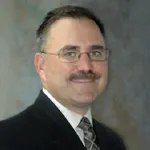
Ken McCurdy
Professor for Counselor Education
Dr. McCurdy has a varied clinical background. He has worked in inpatient psychiatric settings, college counseling, outpatient counseling and in residential settings with children, adolescents, and families.
Learn More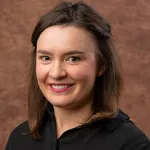
Margaret Hindman
Faculty Member, School of Education
Margaret Hindman is a Licensed Professional Counselor and a Registered Play Therapist with a focus in school-based counseling serving low-income communities.
Learn More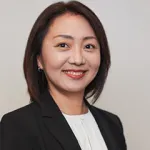
June (Jung) H. Hyun
Associate Professor of Counselor Education, School of Education
Dr. Hyun's clinical experience includes private practice, a community-based nonprofit organization specializing in behavioral and mental health services for children and adolescents, and as a school-based counselor and school counselor.
Learn MoreFrequently Asked Questions
Our clinical mental health counseling graduate program, like many others, prepares you to meet all the requirements of a licensed counselor - it sets you up for success when you take your professional counselor exam afterward. Our 2024-25 graduates have a 100 percent pass rate on the exam, and we credit this outstanding result to a focused curriculum, internship placement assistance, and dedicated support from faculty and advisors.
Yes, SBU partners with students as they approach the practicum and internship courses in the MSED program. SBU supports students throughout the internship approval process to ensure a high-quality experience that meets program requirements. Students are strongly encouraged to begin networking about six months before the practicum starts to ensure all approvals are completed before beginning the 100-hour practicum and the two 300-hour internships.
Time is precious - use it wisely. By doing your master’s online, you are not just eliminating the time it takes to commute to and from campus. You also have the option to choose what day and time you study because courses are delivered asynchronously. Successful students display grit, are well organized (for example, develop week-by-week plans) and lean on support from friends and family when needed.
You will have a Student Success Advisor to lean on for support during your program. Faculty are also contactable by phone and email via MySBU.
Courses will include a variety of videos, live sessions, role plays, demonstrations, discussion boards, and weekly interactive lessons for review.
The online Master of Science in Education - Clinical Mental Health Counseling program costs $825 per credit hour. The total investment for this program is $49,500 for 60 credit hours, excluding fees.
In addition to the BRIGHT Project, there may be different financial aid options available to you as an online student. To learn more about financial aid click here.
You must successfully complete all 60 credits, including passing your clinical experience and comp exam and maintain a cumulative GPA of 3.0 or higher.
Acceptance of transfer credits can vary on a case-by-case basis and by program but not to exceed 6 credits. Master’s-level courses are not permitted to replace doctoral-level courses. All transfer credits must be approved by the program director. Please speak with an enrollment advisor for more information.