Make Your Passion Your Practice
The online Master of Science in Speech-Language Pathology (SLP) program at St. Bonaventure University (SBU) aims to address barriers in education and the growing need for SLP professionals nationwide.
The online M.S. SLP combines whole‑person care, engaged learning, and Franciscan values to prepare students for meaningful careers serving diverse and underserved communities.

Clinical Placement Support
Experiential learning opportunities near your community guided by St. Bonaventure University

Achieve Your SLP Career Goals
Academic & clinical training aligned with certification & licensure requirements
100% Online Coursework
Graduate in 8 trimesters, or about 3 years of full-time study
About The Program
-
Prepare for certification and licensure with an online M.S. SLP program built for your success.
- Eight trimesters (or about 3 years of full-time study) required to complete the program
- 56 credit hours
- 100% online academic coursework (synchronous & asynchronous modalities)
- Focus on your studies—no travel required to campus
- Two annual intakes: Fall and Spring
- No (GRE) required
- Clinical practicum near your home location
- Tailored for adult learners managing responsibilities
- Personalized guidance from a dedicated Student Success Coach
Graduates are ready to:
- Provide competent, entry-level clinical services across the scope of practice that reflect knowledge of the basic principles of human communication and swallowing processes.
- Apply evidence-based strategies for prevention, assessment, and intervention.
- Advance the profession through scholarly inquiry and lifelong learning. Integrate knowledge of culturally responsive practices into all aspects of clinical decision-making across the lifespan.
- Demonstrate oral and written language skills appropriate for clinical practice across varied professional settings.
- Uphold the American Speech Language Hearing Association (ASHA) Code of Ethics in all aspects of service delivery
- Collaborate with interprofessional colleagues to improve quality of service delivery for those with communication and swallowing disorders.
- Advocate for policies and practices of speech-language pathology to continually improve the profession.
-
-
-
-
-
-
Prepare for certification and licensure with an online M.S. SLP program built for your success.
- Eight trimesters (or about 3 years of full-time study) required to complete the program
- 56 credit hours
- 100% online academic coursework (synchronous & asynchronous modalities)
- Focus on your studies—no travel required to campus
- Two annual intakes: Fall and Spring
- No (GRE) required
- Clinical practicum near your home location
- Tailored for adult learners managing responsibilities
- Personalized guidance from a dedicated Student Success Coach
Graduates are ready to:
- Provide competent, entry-level clinical services across the scope of practice that reflect knowledge of the basic principles of human communication and swallowing processes.
- Apply evidence-based strategies for prevention, assessment, and intervention.
- Advance the profession through scholarly inquiry and lifelong learning. Integrate knowledge of culturally responsive practices into all aspects of clinical decision-making across the lifespan.
- Demonstrate oral and written language skills appropriate for clinical practice across varied professional settings.
- Uphold the American Speech Language Hearing Association (ASHA) Code of Ethics in all aspects of service delivery
- Collaborate with interprofessional colleagues to improve quality of service delivery for those with communication and swallowing disorders.
- Advocate for policies and practices of speech-language pathology to continually improve the profession.
Curriculum Highlights
The mission of the online M.S. SLP program is to improve educational access to the profession of speech-language pathology through high-quality, online education focused on developing evidence-based, culturally responsive clinicians who competently serve the diverse needs of their communities.
Academic and clinical experiences aligned with today's work settings and career opportunities: Grounded in theory and evidence-based practices, our curriculum also cultivates essential skills in collaboration, adaptability, resilience, innovation, and professional communication.
The online Master of Science in Speech-Language Pathology (M.S. SLP) program consists of 56 credits, with eight of these credits dedicated to clinical placement. Below are a few sample courses that you can expect from the program. For a full Speech-Language Pathology program curriculum, please fill out the form and download a program guide.
A detailed review of etiologies and characteristics of speech sound disorders including phonological process analysis, formal and informal assessment strategies, differential diagnosis, treatment planning, and selection of targets. The use of culturally responsive practices for a diverse society will be emphasized.
Principles and practices of diagnostic evaluations in speech-language pathology for individuals with suspected speech and/or language impairments. Students will practice taking case history information, development assessment plans, conducting evaluations, writing diagnostic reports, and developing treatment goals.
The first of a two-part course sequence of dysphagia study designed to meet the breadth and depth of knowledge and skill required by the American Speech-Language Hearing Association for clinical practice in dysphagia. This course includes the study of normal swallow physiology, characteristics and etiologies of swallowing disorders. Students will be introduced to clinical and instrumental evaluation procedures for children and adults.
Assessment, intervention, and service models for children with language disorders from preschool through adolescence. Federal laws and regulatory issues across practice settings will be discussed. Providing culturally sensitive, client and family-centered care within an interdisciplinary, collaborative environment will be emphasized.
The study of normal and abnormal processes of voice and resonance. Application of instrumental and perceptual evaluation strategies to assess vocal function. The functional, organic, neurogenic, and psychogenic etiologies will be explored in children and adults. Client-centered practices in treatment will be emphasized and counseling of individuals with laryngectomy and other pathologies will be addressed.
Applied clinical and practical issues related to assessment and treatment of individuals with complex communication needs who require augmentative or alternative communication strategies. Emphasis on culturally appropriate, client-family centered care across the lifespan.
This course focuses on assessment and intervention of the mutually exclusive disorders of autism spectrum disorder and social communication disorder. Differential diagnosis and evidence-based assessment and treatment strategies will be discussed in relation to the role of the speech-language pathologist as part of an interprofessional team. Culturally appropriate, client/family-centered strategies that value diverse perspectives will be emphasized.
This course will explore the neurological bases, assessment, differential diagnosis, and treatment of motor speech disorders in adults and children. The course will introduce students to the principles of neuroplasticity and principles of motor learning. Contemporary issues and approaches to the rehabilitation and management of motor speech disorders will be emphasized.
This course focuses on current issues that affect speech-language pathology. Instruction will include information about certification, specialty recognition, licensure, and other credentialing requirements across practice settings. Regulatory affairs and legal issues in educational, healthcare, and private practice settings will be included. Professional association memberships such as ASHA and state level associations will be discussed along with opportunities for advocacy to support continual improvement of the profession.

Ready to Learn More?
Next Term: Fall 2026
Start Date: August 31, 2026
Limited seats are available. Secure your spot today!
Field Placement Support for Clinical Hours
01
What Placement Support is Available for Practicum?
The clinical practicum experience is guided and directed by St. Bonaventure University, pairing you alongside an on-site practicum supervisor at the site where you will complete your hours. The M.S. SLP faculty and staff at St. Bonaventure University determine practicum site eligibility based on requirements for certification and licensure.
02
How do Placement Services Help me?
Placement services help to facilitate and secure agreements with clinical practicum sites near your home location. The M.S. SLP faculty and staff at St. Bonaventure University determine practicum site eligibility based on requirements for certification and licensure.
03
How Far Will I Need to Travel for Clinical Placements?
Our placement team works closely with students to navigate the clinical placement process and collaborates with students to identify placement opportunities in their preferred locations. In geographic regions with limited placement options, students may need to travel 125 miles each way to meet clinical training requirements across the breadth and depth of clinical practice.
04
What is Involved with Clinical Experiences?
The clinical experiences are designed to provide you with real-world, hands-on experience across the breadth and depth of speech-language pathology clinical practice. These experiences are arranged in a variety of practice settings near your home.
Career Outlook
- New Job Demand: 13,200 estimated SLP job openings each year
- Median Annual Salary: $89,200, with SLPs in residential facilities and hospitals earning over $100,000
Online SLP Program Outcomes
Students will receive a comprehensive SLP education that covers prevention, assessment, and treatment across the full scope of practice including:
- Speech
- Swallowing
- Language
- Augmentative and Alternative Communication
- Cognition
- Hearing
- Voice
- Social Communication
- Fluency
Educational outcomes of the online speech-language pathology degree are based on certification and licensure requirements for entry-level practice in speech-language pathology. Upon completion, students will be prepared to:
- Provide competent, entry-level clinical services across the scope of practice that reflect knowledge of the basic principles of human communication and swallowing processes.
- Demonstrate critical thinking and problem solving in prevention, assessment, and intervention decision-making as supported by principles of evidence-based practice.
- Apply principles of scholarly inquiry to support life-long learning and advancement of the profession.
- Integrate knowledge of culturally responsive practices into all aspects of clinical decision-making across the lifespan.
- Demonstrate oral and written language skills appropriate for clinical practice across varied professional settings.
- Align clinical service provision with the American Speech Language Hearing Association (ASHA) Code of Ethics.
- Collaborate with interprofessional colleagues to improve quality of service delivery for those with communication and swallowing disorders.
- Engage in advocacy to critically evaluate policies and practices of speech-language pathology to support continual improvement of the profession.
KASA Competencies: To be eligible for the Certificate of Clinical Competence (CCC) of the American Speech-Language Hearing Association (ASHA), students must demonstrate proficiency across a set of knowledge and skill competencies set forth by the Council for Clinical Certification (CFCC). These competencies are integrated throughout the academic and clinical experiences of the SBU M.S. SLP program. Achievement is tracked individually for each student through an electronic tracking system that students can access at any time.
The Master of Science in Speech-Language Pathology (M.S. SLP) program at St. Bonaventure University (SBU) is housed in the DePerro School of Health Professions. Based on a framework of evidence-based practice and rooted in the Franciscan, Catholic tradition, the mission of this distance education program is to support educational access to the profession of speech-language pathology and support the development of culturally responsive clinicians who competently serve the diverse needs of their communities.
Our strategic plan includes four interrelated areas of focus
- Strategic Focus #1: Develop a curriculum that reflects excellence in academic and clinical preparation of entry-level speech-language pathologists and meets or exceeds all accreditation and certification requirements.
- Strategic Focus #2: Invest in program faculty, staff, and student training resources to support high quality distance education in health sciences.
- Strategic Focus #3: Recruit, admit, and enroll diverse cohorts of students and support their potential to thrive in the profession of speech-language pathology.
- Strategic Focus # 4: Develop a culture of program evaluation in which data is used to inform program improvements and related outcomes are tracked to determine impact.
The M.S. SLP program strategic plan is dynamic and is updated on a regular basis. Progress toward goals is discussed throughout the year during faculty meetings and during the annual M.S. SLP program evaluation retreat.
As part of our accreditation requirements, we communicate and annually update achievement data for students in the Master of Science in Speech-Language Pathology program. As a new program, we do not yet have outcomes to report. The tables below will be updated as future students matriculate though the program.
On-Time Program Completion Rates
| Reporting Period | # Completed within Expected Time Frame | # Completing Later than on Time | # Not Completing | % Completed within Expected Time Frame |
| Recent Year: 2024-2025 | ||||
| 1 year prior: 2023-2024 | ||||
| 2 years prior: 2022-2023 |
Praxis Examination Pass Rates of Test-Takers
| Reporting Period | #Taking Exam | # Passed Exam | % Passed Exam Rate |
| Recent Year: 2024-2025 | |||
| 1 year prior: 2023-2024 | |||
| 2 years prior: 2022-2023 |
Learn From Our Dedicated Faculty
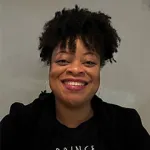
Shatonda S. Jones
Director
Dr. Jones Practice centers on providing evidence-based evaluation and treatment for individuals affected by a wide range of medical diagnoses.
Learn More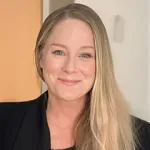
Pamela Hart
Professor & Program Director
Dr. Hart has worked in a variety of clinical and academic settings including universities, infant development centers, assistive technology centers, public schools, hospitals, and rehabilitation facilities.
Learn More
Rebecca Ballou
Clinical Assistant Professor of Speech-Language Pathology, DePerro School of Health Profession
Rebecca Ballou teaches her students to excel as SLPs but also ensure that they are taking the time to advocate for themselves as professionals in the workplace.
Learn MoreFrequently Asked Questions
An online degree is the perfect pathway for those looking to enter the field as a speech-language pathologist. Not only do you have the flexibility allowed by 100% online coursework to balance your life around your schoolwork, but the SLP field is continuing to grow with nearly 13,200 SLP job openings per year, making it an excellent career path option.
And with integrated clinical placement support for your local area, you will graduate from the online SLP program equipped with the skills and experience you need to pursue SLP certification and licensure.
- Bachelor's degree in a communication sciences and disorders related field, OR a bachelor's degree in a different field and successful completion (C or higher) of prerequisite coursework from an accredited university
- Major GPA of 3.0 or higher
- 3 letters of reference (2 academic, 1 professional)
- Personal statement
- Transcript(s)
If your bachelor’s degree is not in CSD or a related field, you must complete prerequisite coursework in the following areas:
- Introduction to Speech-Language Pathology
- Foundations of Audiology
- Language Development
- Speech Development
- Anatomy and Physiology of Speech, Hearing, & Swallowing
- Phonetics
- Speech Science
- Hearing Science
For all prospects: To meet ASHA certification requirements, all applicants must also complete four basic science courses outside CSD (minimum 3 credits each, grade C or higher):
- Biological Science
- Physical Science (must be physics or chemistry)
- Behavioral Science
- Statistics
Failure to complete these prerequisites will make you ineligible to begin the Clinical Fellowship Year (CFY), which is a requirement for ASHA certification. Additional information can be found from ASHA.
The SLP program is specifically designed for adult learners managing multiple responsibilities and provides a flexible plan of study allowing you to continue to meet your obligations while furthering your educational journey.
The Master of Science (M.S.) education program in Speech-Language Pathology, {distance education} at St. Bonaventure University is a Candidate for Accreditation by the Council on Academic Accreditation in Audiology and Speech-Language Pathology (CAA) of the American Speech-Language-Hearing Association, 2200 Research Boulevard, #310, Rockville, MD 20850, 800-498-2071 or 301-296-5700. Candidacy is a “preaccreditation” status with the CAA, awarded to developing or emerging programs for a maximum period of 5 years.
CAA Complaint Information and Contact Information Link: Complaints
The Candidacy process is the regular way that new graduate programs become accredited by the Council on Academic Accreditation (CAA).
Students who graduate from CAA candidacy programs hold all the same rights and privileges as those who graduate from CAA fully accredited programs.
“The U.S. Secretary of Education considers all credits and degrees earned and issued by a program holding candidacy status with the CAA to being from an accredited program since the CAA is a recognized accrediting agency” [Criterion for Recognition §602.23 [34 CFR 602.23(f)(2)] [CAA Accreditation Handbook p. 82].
Courses are instructed using a combination of synchronous and asynchronous distance education learning activities. Synchronous meetings occur weekly for each course and include a variety of application-based learning activities including:
- Case Study Discussions
- Collaborative Diagnostic and Treatment Projects
- Review and Discussion of Current Research
- Guest Speakers
- Q&A Sessions
The program costs $880 per credit hour for a total degree cost of $49,280, excluding fees. With technology fees, the total tuition is $54,040 (course fees and textbooks not included in this total). Tuition is subject to change.
KASA Competencies: To be eligible for the Certificate of Clinical Competence (CCC) of the American Speech-Language Hearing Association (ASHA), students must demonstrate proficiency across a set of knowledge and skill competencies set forth by the Council for Clinical Certification (CFCC). These competencies are integrated throughout the academic and clinical experiences of the SBU M.S. SLP program. Achievement is tracked individually for each student through an electronic tracking system that students can access at any time.
- Provide competent, entry-level clinical services across the scope of practice that reflect knowledge of the basic principles of human communication and swallowing processes.
- Demonstrate critical thinking and problem solving in prevention, assessment, and intervention decision-making as supported by principles of evidence-based practice.
- Apply principles of scholarly inquiry to support life-long learning and advancement of the profession.
- Integrate knowledge of culturally responsive practices into all aspects of clinical decision-making across the lifespan.
- Demonstrate oral and written language skills appropriate for clinical practice across varied professional settings.
- Align clinical service provision with the American Speech Language Hearing Association (ASHA) Code of Ethics.
- Collaborate with interprofessional colleagues to improve quality of service delivery for those with communication and swallowing disorders.
- Engage in advocacy to critically evaluate policies and practices of speech-language pathology to support continual improvement of the profession.
The program is designed to meet the academic and clinical education requirements for national certification through the American Speech-Language Hearing Association (CCC-SLP) and New York state licensure (among others) in speech-language pathology.